
Chunky knits versus fleece pullovers for cold weather

Advertisement
Chunky knit sweaters provide better structural drape and elevated visual texture, while fleece pullovers offer superior wind resistance and lightweight thermal retention. Choosing between them depends on whether your daily agenda requires polished tailoring or functional insulation that handles moisture and outdoor movement.
This comparison helps budget-conscious shoppers and winter commuters assemble versatile cold-weather wardrobes without buying redundant pieces. The main trade-off centers on garment care and wind permeability, as thick knits can allow cold breezes to filter through loose stitches, whereas synthetic fleece creates static friction and leans decidedly casual.
Thermal performance and fabric mechanics
Understanding the physics behind your winter wardrobe helps prevent uncomfortable temperature swings between frosty sidewalks and heated indoor spaces. When evaluating chunky knit vs fleece, the fundamental difference lies in how each textile creates and maintains dead air space around your torso.
Advertisement
A chunky knit sweater relies on thick yarns woven into open, looping ribs or cables. These heavy gauges trap large pockets of warm air generated by your body, making knits feel immediately substantial and warm in still air. However, because open knits feature porous spaces between individual stitches, ambient breezes easily slice through the fabric. Without a wind-resistant shell worn on top, an open-weave sweater loses its insulating value rapidly in gusty weather.
Fleece pullovers operate on an entirely different textile structure. Made from brushed polyester microfibers, fleece mimics the heat-trapping properties of natural shearling wool while remaining remarkably lightweight. The dense web of synthetic fibers traps microscopic pockets of air, preventing convective heat loss more effectively than loose knit loops. Additionally, fleece offers higher resistance to ambient moisture, drying significantly faster than heavy wool or cotton yarns if caught in light snow flurries.
Key insulation properties to evaluate
- Air permeability: Open cable knits require a windproof top layer, while high-pile fleece buffers drafts independently.
- Moisture handling: Polyester fleece repels dampness and dries quickly, whereas heavy natural fibers absorb sweat and feel damp.
- Weight-to-warmth ratio: Fleece delivers high thermal retention at low weight, whereas chunky knits provide comforting physical weight.
If your daily commute involves prolonged periods waiting on chilly train platforms or navigating windy pedestrian corridors, a dense fleece pullover protects your core temperature with less physical bulk. Conversely, if your cold-weather hours are spent primarily inside climate-controlled buildings with gentle drafts, the natural breathability of a chunky knit prevents the stifling overheating often associated with synthetic fleece garments.
Silhouette and visual texture in winter outfits
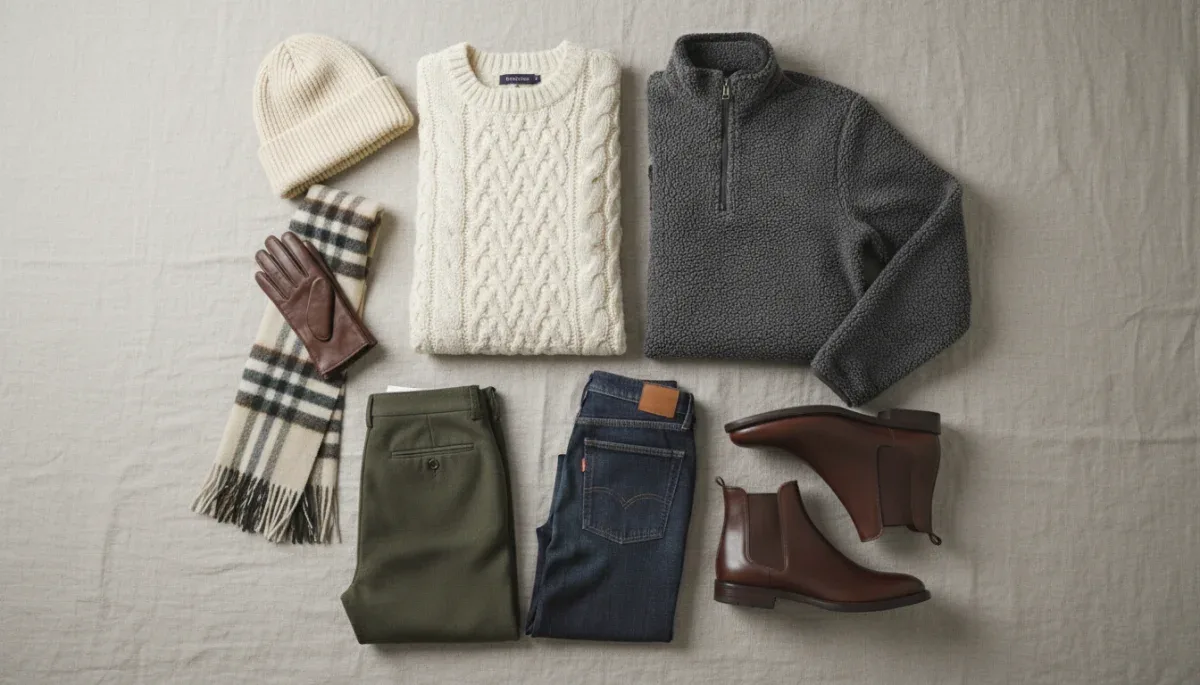
Fabric texture sets the tone of an outfit long before anyone notices the individual cuts or colors. A chunky knit sweater instantly introduces depth, dimension, and artisanal quality to cold-weather styling. The raised ribs, basket weaves, and cable motifs create natural shadows and highlights that make simple outfits look intentional and refined.
Pairing a heavyweight knit with smooth bottoms creates an aesthetically pleasing contrast between rough and sleek textures. For example, wearing an oversized fisherman knit over straight-leg dark denim, pleated wool trousers, or a satin slip skirt produces an effortless balance of volume and structure. The natural weight of the yarn produces a soft, rounded drape at the shoulders that flatters diverse body shapes without looking athletic or utilitarian.
Fleece pullovers carry a sportier, outdoor-heritage connotation that leans casual and technical. While contemporary street style frequently integrates quarter-zip or snap-neck fleece tops into everyday city ensembles, the fabric maintains a matte, uniform surface. The visual appeal of fleece relies heavily on modern silhouette choices, contrasting trim, snap details, and color blocking rather than complex stitch architecture.
When styling a fleece pullover for non-athletic occasions, proportion is everything. An uninspired, mid-weight fleece can easily mimic generic gym apparel if paired with standard athletic leggings and basic running sneakers. To elevate the garment, fashion stylists frequently contrast the synthetic pile with structured outerwear, tailored wide-leg trousers, chunky leather loafers, or vintage-wash denim. This juxtaposition neutralizes the outdoor-recreation vibe and repositions the fleece as a conscious fashion statement.
Layering under outerwear and over base layers
A successful cold-weather styling system relies on smooth transitions between outdoor elements and indoor heating. How easily a top slides under a winter coat determines how practical it will prove over months of daily wear.
Chunky knit sweaters can create significant friction when pulled through fitted coat sleeves. The sheer bulk of thick cable yarns often bunches around the armpits and forearms, restricting your range of motion inside tailored wool coats or slim-cut trench coats. To wear chunky knits comfortably outdoors, you typically need an oversized overcoat, a cocoon-silhouette parka, or a roomy puffer jacket designed with dropped shoulder seams.
Fleece pullovers offer far greater versatility within traditional three-layer systems. Developed originally for mountaineering and outdoor sports, fleece functions ideally as a thermal mid-layer. Its compressible structure allows it to nest comfortably beneath tailored wool topcoats, technical shells, and down parkas without creating restrictive sleeve tightness.
Layering considerations for daily comfort
- Under-layer friction: Fleece slides easily over basic cotton tees, but can cause static cling against synthetic thermal tops.
- Neckline options: Mock-neck and snap-collar fleece tops seal drafts at the throat, reducing the immediate need for a separate scarf.
- Indoor versatility: Half-zip fleece pullovers allow manual ventilation, whereas crewneck knits require pulling the garment completely off if rooms get too hot.
The neck design of your garment also influences your layering strategy. High-neck chunky turtlenecks eliminate the need for bulky scarves and create an elegant, architectural frame for your face under structured coats. Meanwhile, quarter-zip fleece pullovers allow you to adjust airflow instantly by sliding the zipper down when stepping from an icy sidewalk directly into a warm coffee shop or grocery store.
Longevity, laundering, and fabric maintenance
Garment care requirements dictate the real-world lifespan of your winter clothing. While both chunky knits and fleece pullovers will last for several seasons when treated correctly, they fail in completely distinct ways when neglected or washed improperly.
Chunky knit sweaters—particularly those containing wool, alpaca, cotton, or blended acrylic yarns—demand deliberate maintenance. Heavy knits are vulnerable to snagging on jewelry, bag straps, and zipper teeth. Furthermore, friction against coats causes surface fibers to tangle into pills, particularly along inner arms and side seams. To maintain their look, knits require periodic de-pilling with a fabric comb, hand washing or delicate cycles with gentle detergent, and flat drying on a drying rack to prevent heavy water weight from warping the original shape.
Fleece pullovers are significantly more durable and forgiving in the family laundry room. Constructed from tough synthetic fibers, standard polyester fleece can withstand regular machine washing on gentle cycles without losing its core shape or shrinking. However, fleece has its own unique vulnerabilities: heat and microfiber matting. Washing fleece in hot water or tossing it into a hot dryer permanently singes the fine plastic fibers, turning soft pile into a rough, scratchy surface that permanently attracts lint and animal hair.
Static electricity is another persistent challenge with synthetic fleece during dry winter months. Static can make fleece cling uncomfortably to base layers, shock door handles, and collect stray pet hair within minutes. Knits made from natural fibers like wool or cotton absorb microscopic moisture from the surrounding air, naturally eliminating annoying static buildup throughout the day.
Styling for different winter dress codes
Context determines whether a chunky knit or a fleece pullover is the correct garment for your day. Aligning your piece with the social and professional setting ensures your outfit appears appropriate rather than sloppy or overdressed.
In smart-casual office settings and business environments, chunky knits hold an undeniable advantage. A well-constructed crewneck or mock-neck sweater in cream, camel, navy, or charcoal conveys professionalism, warmth, and attention to detail. It pairs effortlessly with tailored ankle pants, midi skirts, and structured leather boots. In contrast, even high-end designer fleece pullovers frequently read as too athletic or utilitarian for formal work environments, client meetings, or evening dining.
For weekend activities, casual creative workplaces, travel days, and outdoor excursions, fleece pullovers excel. A colorful or retro-inspired fleece adds a relaxed, energetic aesthetic to weekend errands, dog walks, and casual brunches. The lightweight nature of fleece also makes it the superior choice for air travel, where cabin temperatures fluctuate unpredictably and garments must be packed into carry-on luggage without emerging completely crushed or creased.
If you work from home, fleece pullovers provide low-maintenance, reliable comfort that withstands hours sitting at a desk without stretching out at the elbows. However, if your remote role requires frequent impromptu video calls, a classic chunky knit sweater looks significantly more polished and intentional on webcam framing than a casual outdoor fleece.
Budget considerations and smart shopping choices
Building a cold-weather capsule wardrobe on a budget requires evaluating price per wear rather than looking solely at the purchase sticker price. Both knitwear and fleece span wide price points across mainstream retail brands.
Budget-friendly chunky knits are frequently made from 100 percent acrylic or acrylic-polyester blends. While these synthetics offer an affordable entry point and reproduce the lofty look of wool, they can pill rapidly, trap odor, and lack temperature-regulating breathability. High-quality natural wool or alpaca sweaters command higher upfront costs but maintain their insulation value and look sharp for many years when properly maintained. Thrifting and secondhand platforms offer exceptional value for pure wool chunky knits, often selling timeless vintage pieces for the price of new acrylic fast-fashion alternatives.
Fleece pullovers offer outstanding value at budget and mid-tier price points because the underlying fabric is inherently inexpensive polyester. A twenty-dollar budget fleece often delivers ninety percent of the thermal performance found in a hundred-dollar designer outdoor brand. When shopping for fleece on a budget, examine the zipper quality, pocket lining fabric, and binding around the cuffs and hem, as these construction details reveal how well the garment will hold up over multiple winters.
At a glance
| Factor | What to know |
|---|---|
| Wind resistance | Fleece blocks drafts naturally, while chunky open knits require a windproof shell. |
| Visual formality | Chunky knits easily dress up for smart-casual offices, while fleece remains decidedly casual. |
| Laundering ease | Fleece tolerates machine washing well, whereas chunky knits require delicate handling and flat drying. |
| Outerwear layering | Fleece compresses easily under coats, while thick cable knits demand roomy, oversized outerwear. |
Frequently asked questions
Which is warmer, a chunky sweater or fleece?
Fleece is warmer in windy and active conditions because its dense microfiber structure blocks moving air. A chunky knit traps significant heat in calm indoor settings, but cold outdoor drafts easily penetrate through the spaces between large stitches unless covered by a windproof coat.
Can I wear a fleece pullover to work?
Yes, if your office follows a relaxed or creative casual dress code. Pair a solid-color, minimalist quarter-zip fleece with tailored wool trousers and clean leather footwear to maintain professionalism. For traditional business casual environments, a chunky knit sweater remains the safer, more appropriate choice.
How do I prevent my fleece pullover from pilling?
Wash your fleece inside out on a gentle cycle with cold water, and air dry it on a hanger or rack. Never use high heat in the dryer, as excessive heat melts the delicate synthetic tips, causing them to tangle into stubborn pills and attract static lint.
Do chunky knit sweaters stretch out after wearing?
Yes, heavy knit yarns naturally relax and stretch out over the course of the day due to their physical weight. Avoid hanging chunky knit sweaters on coat hangers to prevent shoulder bumps, and fold them neatly in drawers or on closet shelves to preserve their original shape.
The bottom line
Choosing between a chunky knit sweater and a fleece pullover comes down to balancing professional polish against lightweight practical insulation. Chunky knits elevate everyday outfits with rich texture and structured drape, while fleece delivers reliable, low-maintenance warmth that performs exceptionally well in unpredictable weather and layered casual outfits. Before buying a new piece, check the composition label on the inner hem to confirm whether the fabric requires delicate flat drying or can handle your regular home laundry routine.
Written by
Mariana Viana
Mariana Viana writes about seasonal fashion trends and celebrity style steals for news4shein.com. Each article explains how things work, compares published details such as prices, policies and program rules, and points readers to the official source before they decide.