
Fleece vs wool coats for winter warmth and weather
Advertisement
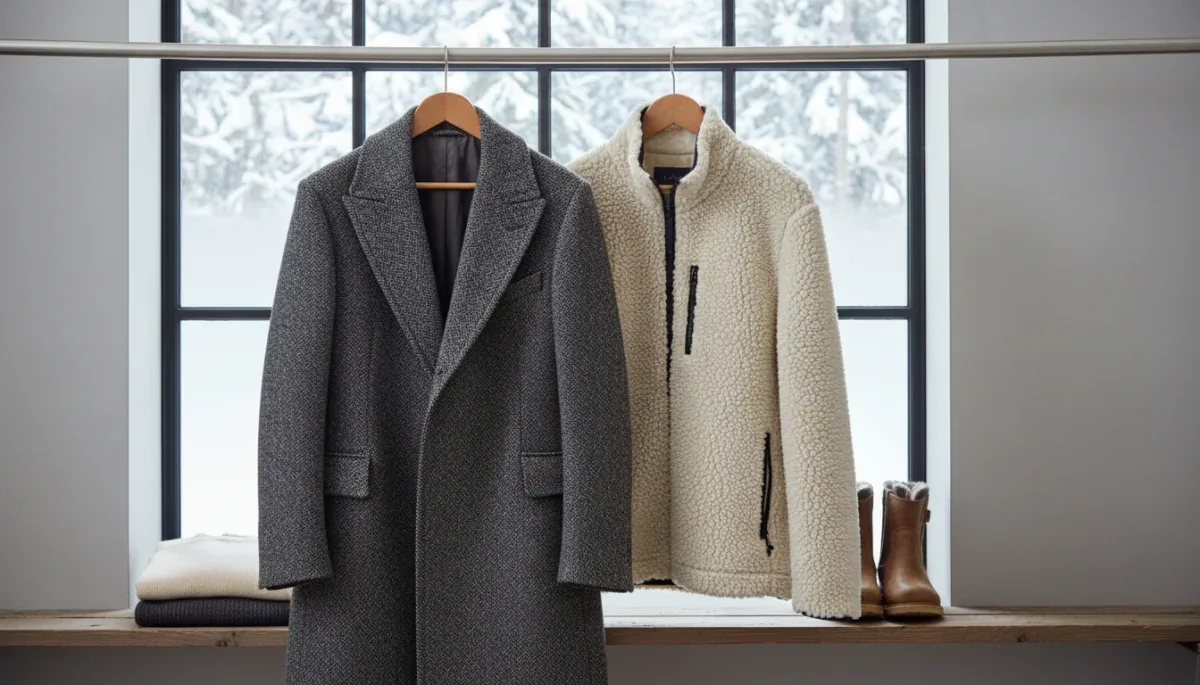
Wool coats provide superior warmth in biting winds and sustained outdoor freezing temperatures due to dense fiber crimp, while fleece coats offer lightweight insulation that excels at breathability during active use. The structural difference between natural animal hair and synthetic spun polyester dictates how each material traps ambient body heat and interacts with harsh winter weather.
This comparison helps daily commuters and outdoor walkers choose the right outerwear without overspending, though finding true weather protection often means pairing either fabric with a proper windproof or water-resistant outer shell. Understanding the biological properties of sheared wool alongside the engineered design of synthetic pile ensures you invest in winter layers that suit your regional climate and daily routine.
How wool creates and retains winter heat
Natural wool comes from sheep fleece, structured around complex protein fibers known as keratin. These fibers possess an inherent micro-crimp, meaning they bend and coil naturally rather than lying straight. When woven or boiled into coat fabric, these microscopic curls create millions of tiny, stationary air pockets. Because still air acts as one of nature's most effective thermal barriers, wool traps metabolic body heat right near your core before external freezing air can displace it.
Advertisement
The natural density of heavy wool outerwear contributes substantially to its insulative rating. Melton wool, boiled wool, and double-faced tweeds pack substantial fiber weight per square yard, making the barrier between your body and outdoor drafts thick and resilient. In dry, sub-freezing weather, a structured wool coat holds an internal microclimate for hours, balancing warmth without building up clammy interior vapor during slow, steady movement.
Key thermal mechanisms of sheep wool
- Natural fiber crimp generates non-collapsing microscopic air pockets.
- Heavy fabric densities physically resist ambient cold transfer.
- Natural protein structures store warmth steadily during long outdoor exposure.
Wool also manages thermal transitions smoothly when you move between heated indoor stores and icy sidewalks. Because the fiber breathes naturally through its interior cellular structure, it buffers sudden temperature spikes. You stay warm outdoors without experiencing the instant, stifling heat buildup that often happens when stepping indoors while wearing non-breathable synthetic jackets.
How synthetic fleece insulates against cold
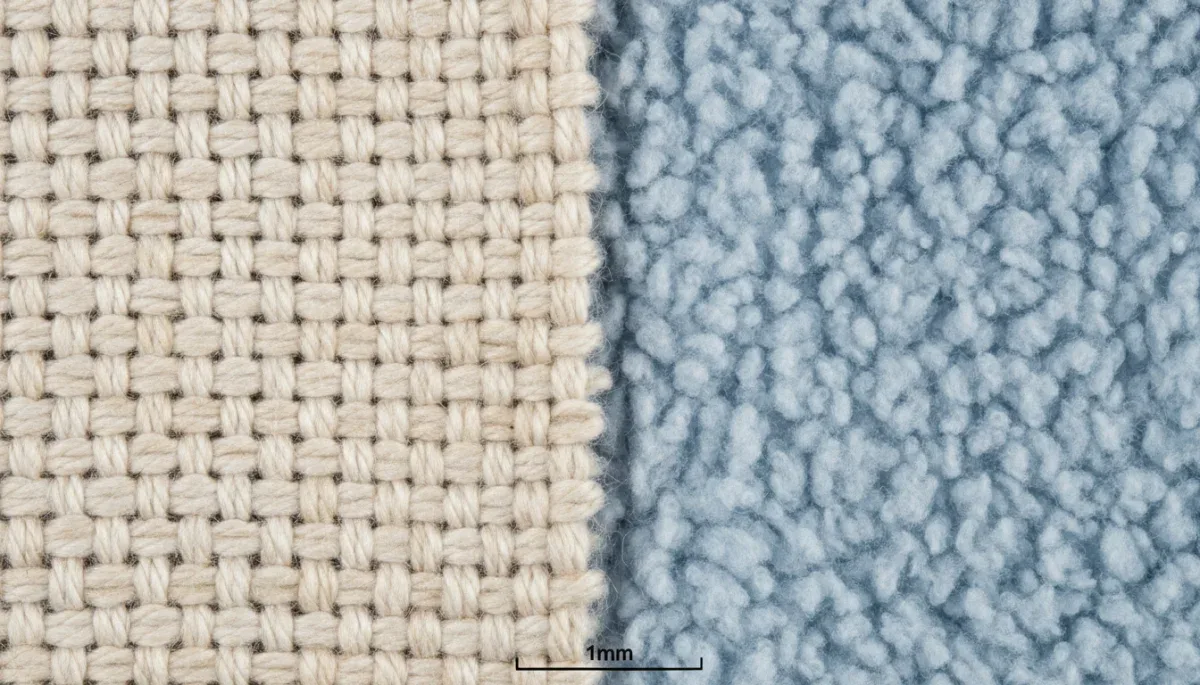
Polar fleece is an artificial textile typically manufactured from polyethylene terephthalate, the same polyester polymer used in water bottles and performance clothing. To create fleece, manufacturers weave polyester yarns into a light fabric and then brush the surface with fine wire teeth to cut and lift the tiny loops. This mechanical process produces a deep pile of raised synthetic hairs that trap dead air, mimicking the thermal efficiency of natural animal coat fibers.
Because polyester threads are exceptionally lightweight compared to solid animal hair, fleece delivers an outstanding warmth-to-weight ratio. A thick fleece jacket feels noticeably lighter on the shoulders than a heavy tailored overcoat while still providing strong baseline insulation. This property makes fleece a popular choice for budget-conscious winter shoppers who dislike the heavy, restrictive drape of traditional structured outerwear.
Core characteristics of polyester fleece
- Brushed micro-threads hold ambient heat in high-loft pockets.
- Hydrophobic polymers prevent fibers from absorbing liquid into their core.
- Low overall material mass reduces neck and shoulder fatigue during all-day wear.
The main limitation of standard fleece is its open matrix. Unlike tightly milled wool broadcloth, standard brushed fleece has a porous knit backing. In still indoor air or beneath a shell jacket, fleece keeps you warm instantly. However, without an internal laminate barrier, cold ambient breezes can circulate through the knit, cooling the trapped warm air before it stabilizes.
Moisture management and wet weather defense
Winter precipitation presents a major challenge for any coat material, and fleece vs wool coats handle humidity, freezing drizzle, and melting snow in completely opposite ways. Wool is naturally hygroscopic, meaning its inner cortex absorbs moisture vapor directly into the fiber core while its outer surface remains coated in natural lanolin wax. A quality wool coat can absorb up to thirty percent of its dry weight in moisture without feeling wet to the touch.
Crucially, wool produces a natural thermal reaction called the heat of sorption when it absorbs damp air, releasing minute amounts of heat as water molecules bond with keratin proteins. This unique physical trait keeps you warm even if caught in sudden snow flurries. However, once saturated by sustained heavy rain, wool becomes exceptionally heavy, takes days to air dry, and can develop a lingering earthy odor if not dried in good ventilation.
Polyester fleece operates as a hydrophobic material, absorbing less than one percent of its weight in liquid water. When snow melts onto fleece, moisture rests on the fiber surface rather than soaking into the filament centers. While water can permeate the gaps between threads, the synthetic fibers maintain their loft, meaning fleece keeps insulating even when wet. It also dries rapidly near indoor room heat, making it an practical option for frequent, wet slush commutes.
Wind resistance and outdoor durability
Biting winter wind steals body heat far faster than still cold, making wind deflection a crucial consideration for coat shoppers. Woven wool coats, particularly those made with dense Melton or heavy boiled construction, provide formidable resistance against wind chill. The intersecting warp and weft yarns, compacted further through industrial fulling processes, create a rigid structural wall that prevents blustery gusts from cutting straight to your skin.
Standard fleece coats struggle in high-wind conditions unless constructed with an integrated windproof polyurethane membrane between fleece layers. Because standard fleece relies on an open knit structure, brisk winds easily penetrate the loft, carrying away the cushion of trapped warm air your body worked to produce. Wearing an unlined fleece on an open, windy train platform or coastal street often feels surprisingly chilly, regardless of the jacket's physical thickness.
In terms of surface friction, wool resists rough abrasion well but can wear thin around cuffs and underarm seams after years of repetitive rubbing. Fleece handles surface friction without tearing, yet it is prone to pilling, forming tiny fiber balls across high-friction zones. While synthetic fleece will never rot or weaken from insect exposure, woven wool resists sparks and embers better, whereas synthetic fleece can instantly melt if touched by errant sparks from an outdoor fire pit or heater.
Weight, layering flexibility, and daily comfort
A coat's bulk shapes how easily you move through your daily schedule, from grocery runs to crowded office commutes. Wool coats typically weigh between three and six pounds, providing a substantial, grounded silhouette that drapes cleanly over formal business attire, tailored blazers, and knit sweaters. That structural heft offers comforting physical warmth, though it can feel cumbersome during prolonged driving or vigorous outdoor walking.
Fleece coats weigh considerably less and provide flexible multi-directional stretch. Modern shearling-style sherpa fleece and technical grid fleece bend easily with your elbows and torso, preventing the shoulder tightness common with stiff woven garments. For casual errands, walking the dog, or weekend outdoor sports, fleece provides instant, unrestrictive comfort that packs down tightly inside a gym bag or carry-on suitcase.
Practical layering scenarios for each fabric
- Dense wool overcoats work best as a standalone outer layer over business clothing.
- Midweight fleece performs ideally as an insulating mid-layer underneath a waterproof shell.
- Casual oversized fleece serves as convenient dry-weather car outerwear for short trips.
If your daily winter routine involves switching between rapid physical exertion and quiet sitting, fleece mid-layers adapt quickly. You can unzip a fleece jacket or vent your collar without carrying cumbersome dead weight, while a structured wool coat requires you to manage its bulk whenever you choose to take it off indoors.
Care routines, garment lifespan, and budget value
Long-term maintenance and price points often decide the contest between fleece vs wool coats. High-grade wool overcoats represent a major upfront wardrobe investment. Because agitation and hot water cause wool fibers to shrink irreversibly, wool coats generally require seasonal professional dry cleaning, spot treatments with a damp cloth, and cedar storage to prevent clothes moth damage during summer months.
Synthetic fleece delivers low-maintenance convenience at budget-friendly retail price points. Most fleece coats can be washed at home in a standard washing machine on a gentle cold cycle and hung on a drying rack to air dry within hours. However, fleece sheds microscopic synthetic fragments during wash cycles and can attract static electricity, pet hair, and lint throughout dry winter months.
When evaluated over a ten-year horizon, a well-tailored wool coat offers remarkable cost-per-wear value because its timeless aesthetic outlasts passing trend cycles. A sturdy wool coat retains its structural silhouette for decades when brushed regularly with a stiff garment brush. Fleece outerwear offers immediate, accessible winter warmth right off the rack, serving practical everyday casual roles where fragile fabrics might get soiled or damaged.
At a glance
| Factor | What to know |
|---|---|
| Wind resistance | Woven wool naturally blocks cold gusts, while standard fleece requires an internal membrane to stop wind penetration. |
| Wet performance | Wool repels initial drizzle and stays warm when damp, but fleece repels water absorption and dries much faster. |
| Weight and bulk | Fleece provides lightweight, flexible insulation, whereas wool coats carry heavier mass with a structured, formal drape. |
| Cleaning care | Wool coats generally require professional dry cleaning, while fleece coats wash easily at home in cold water. |
Frequently asked questions
Is fleece warmer than wool in sub-zero winter temperatures?
A heavy, woven wool coat is generally warmer in sub-zero conditions because its density blocks freezing wind that would otherwise cut through standard fleece. Fleece can match wool's warmth only when paired with a windproof exterior shell jacket.
Can you wear a fleece coat in the snow?
Yes, fleece handles dry, falling snow reasonably well because its synthetic fibers do not absorb moisture readily. However, once snow begins to melt into water, moisture will seep through the porous knit unless the jacket includes a treated water-resistant surface.
Why are wool coats more expensive than fleece jackets?
Wool coats cost more due to agricultural harvesting expenses, multi-stage milling, and labor-intensive tailored tailoring. Synthetic fleece utilizes widely available polyester polymers that manufacturers spin, knit, and brush quickly at high volume for significantly lower production costs.
Does fleece cause more static electricity than wool in winter?
Yes, synthetic polyester fleece generates significantly more static electricity than natural wool fibers in dry indoor environments. Wool retains microscopic amounts of internal moisture vapor that naturally disperse static build-up, preventing static cling during winter months.
The bottom line
Choose a dense wool coat if you need wind-blocking insulation, formal versatility for work, and durable warmth for standing or walking in city cold. Pick a synthetic fleece coat if you prefer lightweight flexibility, affordable casual utility, and low-maintenance home laundering for active weekend wear. Before purchasing either option, check the fabric composition label on the garment lining to confirm the actual wool or polyester percentage rather than relying solely on the exterior texture.
Written by
Mariana Viana
Mariana Viana writes about seasonal fashion trends and celebrity style steals for news4shein.com. Each article explains how things work, compares published details such as prices, policies and program rules, and points readers to the official source before they decide.