

How Summer to Fall Transition Dressing Works
Advertisement
Transition dressing is the practice of combining warm-weather staples with cool-weather layers to handle fluctuating daily temperatures. This approach helps budget-conscious shoppers maximize their current closet without buying an entirely new seasonal wardrobe before the cold weather sets in permanently.
The main challenge is balancing breathable base garments with structured, insulating outer pieces so you stay comfortable during cool mornings and hot afternoons. When you understand the basic mechanics of fabric weight, color balancing, and modular layers, you can build practical outfits that work reliably across changing climates.
The core mechanics of transitional layering
Layering during seasonal shifts is not simply about piling heavy garments over light clothes. Successful transitional dressing relies on modular assembly, where each layer serves a distinct purpose and looks complete on its own if outer garments are removed during warmer afternoon hours.
Advertisement
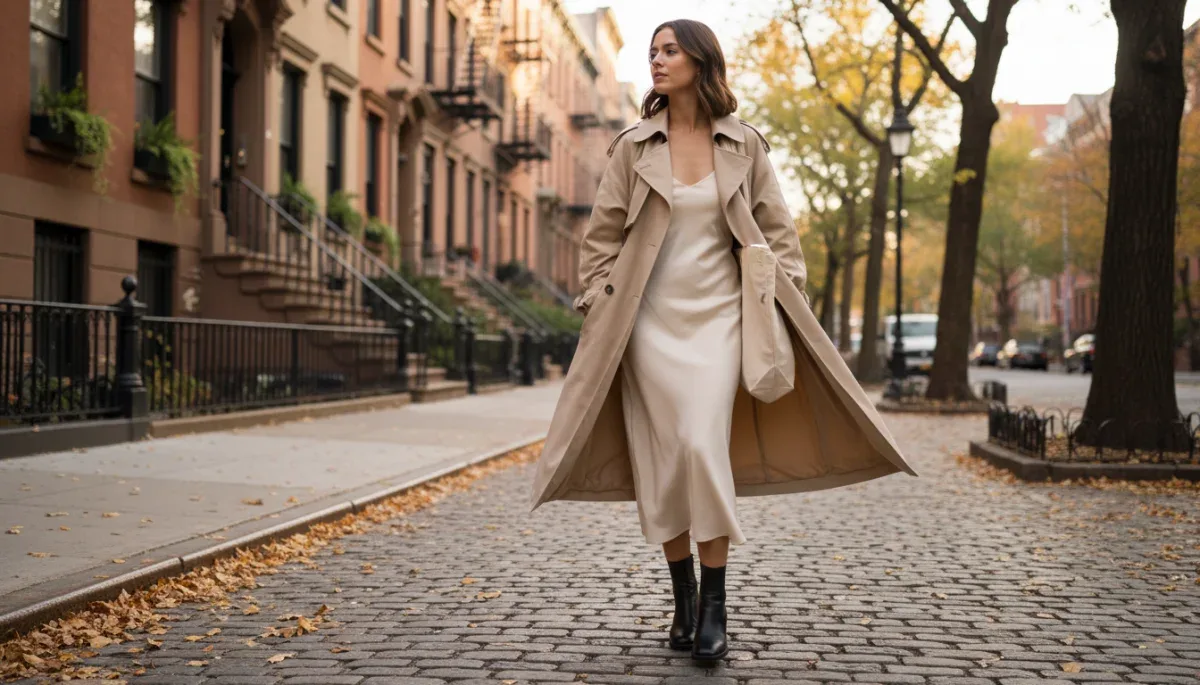
The foundation of this system begins with a breathable base layer made of natural fibers or lightweight synthetics. Cotton t-shirts, ribbed tank tops, and lightweight silk or satin skirts function effectively as base pieces because they prevent overheating when the temperature peaks at midday. The middle layer introduces slight warmth and texture, often in the form of an open knit cardigan, an unbuttoned poplin button-down shirt, or a lightweight denim jacket. The outer layer provides structure and weather resistance, such as a classic trench coat or an unlined utility jacket.
Essential rules for building modular layers
- Keep your innermost layer fitted or streamlined to avoid bunching when heavier pieces are added on top.
- Ensure every intermediate piece looks presentable as a standalone garment if afternoon heat forces you to take off your coat.
- Vary the lengths of your garments to create visual proportion, such as pairing a cropped jacket with a mid-length dress.
- Choose outer layers with functional closures like buttons or double zippers to adjust airflow throughout the day.
By treating each piece as an independent building block, you avoid the common pitfall of dressing exclusively for the morning chill only to feel uncomfortably warm by lunchtime.
Balancing summer fabrics with autumn textures
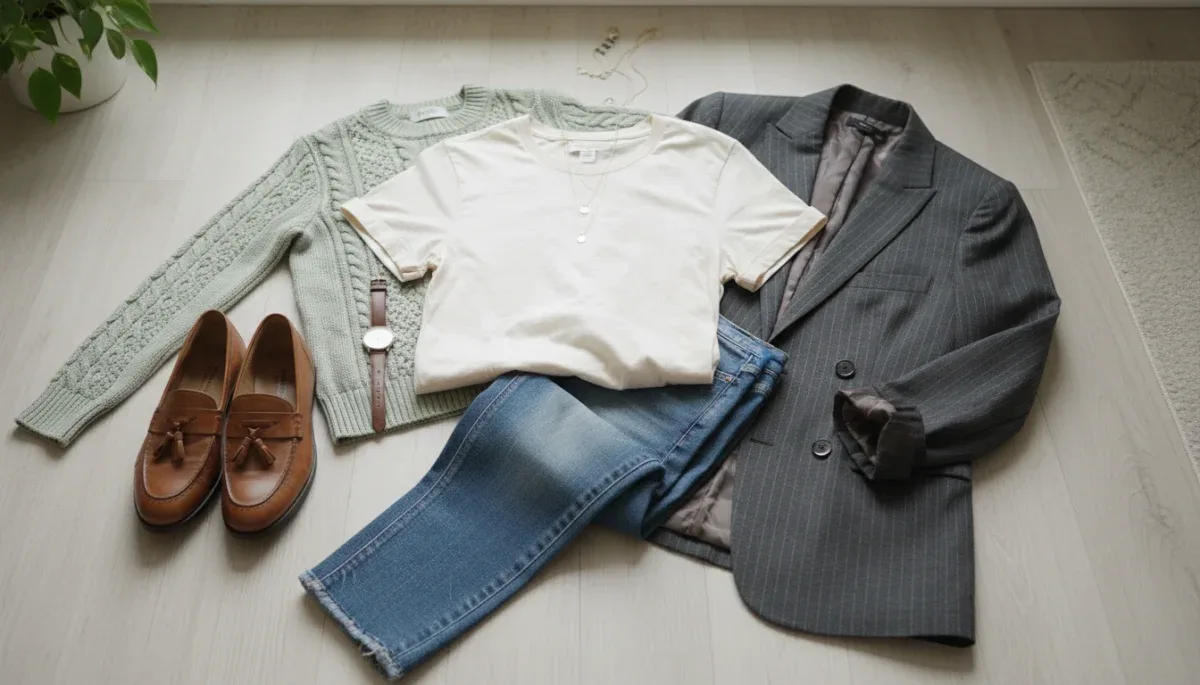
Fabric pairing is the most noticeable visual indicator of a thoughtful transitional outfit. During late August and throughout September, wearing full-weight wool or heavy shearling feels premature and impractical, while pure linen can appear out of sync with the shifting environment.
The solution lies in creating deliberate friction between airy materials and substantial weaves. Pairing a lightweight cotton eyelet blouse with structured heavy denim grounds the delicate nature of the top. Similarly, styling a breezy slip dress beneath a structured wool-blend blazer or a chunky ribbed cardigan bridges the gap between summer lightness and autumn density. Suede, corduroy, and medium-weight knits act as natural bridge textiles because they add depth without excessive thermal insulation.
Effective textile pairings for variable weather
- Fine-gauge cotton knitwear layered over linen trousers to extend summer pants into early September.
- Suede or faux-suede overshirts worn unbuttoned over ribbed jersey tank tops.
- Silk or satin midi skirts styled with structured cotton canvas jackets.
- Lightweight poplin shirting worn beneath open-weave crochet or mesh knit sweaters.
These combinations allow your skin to breathe while visually introducing the tactile richness associated with autumnal styling.
Shifting the color palette without buying new clothes
You do not need to replace your entire wardrobe with autumnal tones to participate in seasonal dressing. Color transition is primarily about anchoring bright or pastel summer items with grounded, neutral tones that feel appropriate for overcast skies and shorter days.
If you own vibrant sundresses or light-wash denim, you can balance their brightness by introducing shades like olive green, espresso brown, warm camel, burgundy, and slate gray through your accessories and outer layers. A pastel slip dress instantly shifts into autumn territory when paired with a chocolate brown leather jacket rather than a white denim jacket. Similarly, white cotton jeans continue to work well into September and October when paired with a charcoal sweater and dark loafers instead of strappy sandals and a bright tank top.
Practical methods to ground summer colors
- Replace bright canvas bags with structured leather or faux-leather totes in cognac, burgundy, or black.
- Swap light pastel hair accessories and scarves for rich earth tones or classic plaid patterns.
- Combine cream or off-white garments with dark navy, olive, or charcoal rather than bright sorbet hues.
- Incorporate tortoiseshell jewelry and darker metallic accents to provide warmth to cool-toned summer outfits.
Using deeper grounding tones allows your favorite warm-weather pieces to remain in regular rotation for several additional weeks without looking out of place.
Footwear swaps that redefine your outfit
Footwear dictates the overall seasonal tone of an outfit faster than any other single component. You can wear the exact same base outfit of a slip dress or denim skirt, but changing the shoes completely alters the visual weight and weather readiness of the look.
As morning temperatures drop, open-toe sandals and canvas espadrilles can be swapped for closed-toe alternatives that still feel lightweight. Loafers, tailored ballet flats, structured sneakers, and mules provide immediate coverage while retaining ease of movement. As the season progresses further into autumn, ankle boots, western-style boots, and knee-high leather boots can be introduced beneath midi skirts and dresses to provide calf warmth without requiring heavy winter tights.
Strategic footwear transitions by stage
- Early transition: Swap open-toe slides for leather mules, woven flats, or classic low-profile sneakers.
- Mid transition: Introduce chunky penny loafers, platform oxfords, and ankle-height Chelsea boots.
- Late transition: Move to knee-high boots paired with midi skirts, or add thin wool socks with loafers.
Making conscious footwear updates allows you to adjust to damp sidewalks and brisk breezes while keeping your primary clothing lightweight and breathable.
Budget-friendly outerwear to bridge the seasons
Investing in a small selection of versatile, inexpensive outer layers is the most cost-effective way to prepare for autumn. Rather than purchasing specialized cold-weather coats immediately, focusing on multi-purpose layer pieces provides the highest return on investment.
An oversized blazer is one of the most reliable transition items available. It can be worn over t-shirts, dresses, or light hoodies, instantly adding polish and structure. A lightweight cotton trench coat offers rain resistance and wind protection without trapping excessive body heat during afternoon commuting hours. Overshirts, often referred to as shackets, offer the relaxed appearance of a shirt with the thermal properties of a light jacket, making them easy to tie around the waist or carry in a bag when the sun comes out.
High-utility outer layers to prioritize
- Oversized single-breasted blazers in houndstooth, plaid, or neutral solid shades.
- Classic mid-length trench coats with removable waist belts for silhouette adjustment.
- Denim trucker jackets in medium to dark washes that accommodate sweaters underneath.
- Utility chore jackets crafted from sturdy cotton twill with functional exterior pockets.
Focusing on these versatile silhouettes ensures that your outer layer complements both lingering summer pieces and upcoming winter garments.
At a glance
| Factor | What to know |
|---|---|
| Base Layer | Choose breathable cotton or jersey to stay comfortable during warm afternoons. |
| Fabric Texture | Pair lightweight summer silks and cottons with heavier knits, denim, or suede. |
| Color Strategy | Ground pastel or bright pieces with earth tones like brown, olive, and navy. |
| Footwear Shift | Replace open sandals with loafers, mules, and boots to add visual weight. |
Frequently asked questions
Can I wear white jeans after Labor Day?
Yes, white and off-white denim works well throughout the autumn months. To make white jeans feel seasonally appropriate, pair them with heavier textures like chunky knit sweaters, structured dark blazers, and closed-toe leather loafers rather than lightweight summer tank tops and sandals.
What is the easiest way to wear summer dresses in fall?
Layer a fitted turtleneck or t-shirt underneath sleeveless dresses, or add an oversized knit sweater on top. Completing the outfit with ankle boots or leather sneakers instantly transforms a lightweight summer dress into a functional fall ensemble.
How do I handle cold mornings and hot afternoons?
Dress using three distinct layers comprising a breathable base top, a removable light layer, and a structured coat. This configuration allows you to shed or add individual pieces as the temperature rises and falls throughout the day.
Which fall trend is easiest to style on a budget?
Incorporating autumn color accents through thrifted blazers, scarves, or second-hand leather accessories is the most cost-effective approach. These small additions alter the tone of your current wardrobe without requiring you to purchase an entirely new collection of garments.
The bottom line
Transition dressing is a practical styling method that extends the lifespan of your summer wardrobe by pairing lightweight staples with structured layers, rich textures, and closed-toe footwear. Before spending money on new seasonal clothing, inspect your existing closet to identify which summer pieces can be adapted with a simple blazer, trench coat, or pair of loafers.
Written by
Mariana Viana
Mariana Viana writes about seasonal fashion trends and celebrity style steals for news4shein.com. Each article explains how things work, compares published details such as prices, policies and program rules, and points readers to the official source before they decide.