
How bridal fashion week shapes retail wedding dresses
Advertisement
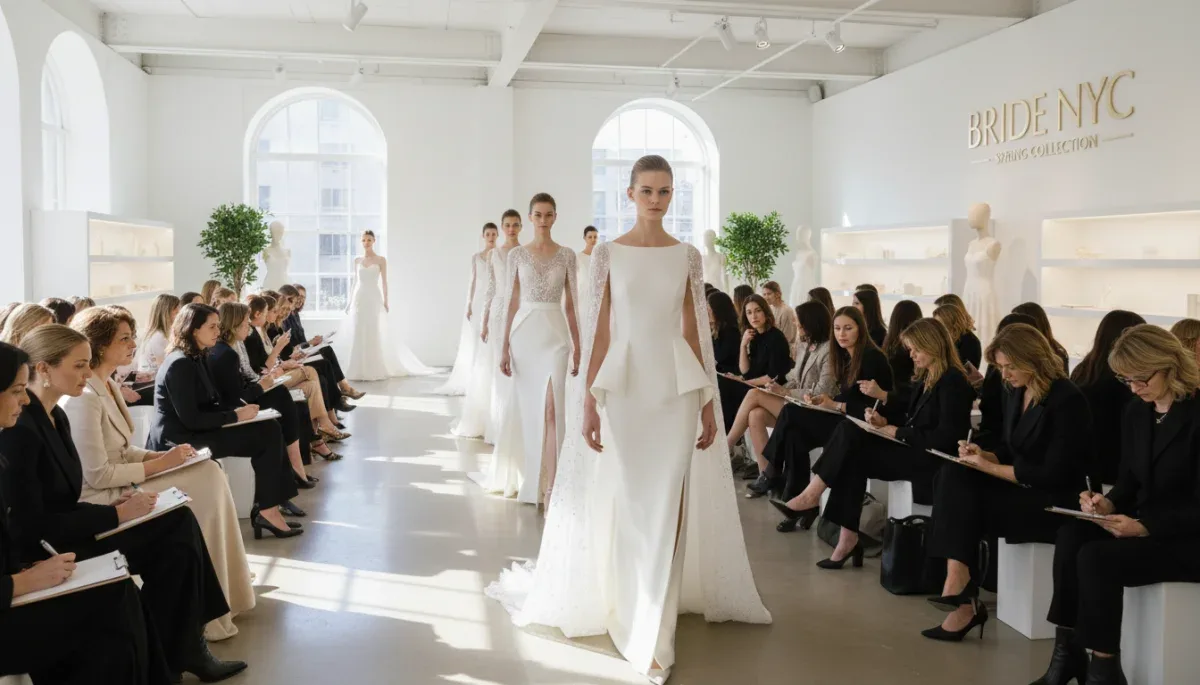
New York Bridal Fashion Week dictates the silhouettes, fabrics, and decorative elements that appear in consumer bridal salons across the United States roughly six to nine months after the shows conclude. Twice a year, bridal design houses present their upcoming collections to an audience of retail boutique owners, corporate department store buyers, and fashion editors who decide which runway concepts will be manufactured for public sale.
Understanding this transition helps engaged shoppers identify upcoming dress trends before they reach peak retail pricing, while clarifying why certain runway details either disappear or change dramatically before reaching local showroom racks. The catch is that high-end runway concepts must navigate production minimums, fabric substitution, and commercial wearability before an independent salon or national chain agrees to stock them.
The commercial timeline from runway show to boutique rack
New York Bridal Fashion Week takes place primarily in April and October, operating on a business-to-business schedule distinct from traditional ready-to-wear fashion weeks. Designers unveil collections meant for the subsequent wedding seasons, giving manufacturers and retail stockists ample time to align production with consumer demand cycles.
Advertisement
When a designer presents thirty gowns on a Manhattan runway in April, those dresses represent wholesale samples rather than finished store inventory. Independent boutique buyers and corporate merchandisers sit in private showrooms immediately following the public presentations to inspect the internal construction, review wholesale line sheets, and negotiate wholesale purchase orders. Most retail contracts require deposits during these market appointments, locking in the styles that individual shops will receive later in the year.
Factory production begins during the summer months, largely handled by specialized manufacturing facilities in Asia and Europe. The physical gowns typically arrive in regional boutiques between November and January, perfectly timed for the annual peak engagement season between Christmas and Valentine's Day. Brides shopping in early spring are therefore buying the direct retail interpretation of the designs presented in New York the previous year.
How boutique buyers curate mainstream salon inventory
Boutique buyers act as the primary filter between high-fashion couture experimentation and the pragmatic realities of regional wedding markets. While designers use runway shows to build brand prestige through dramatic silhouettes and experimental textiles, salon owners must invest in inventory they can realistically sell to everyday consumers.
Key evaluation points during wholesale appointments
- Structural support: Buyers check whether lightweight runway corsetry can support diverse body shapes without slipping or requiring costly structural alterations.
- Alteration flexibility: Gowns with excessive surface embroidery across seam lines are often passed over because tailoring them requires labor-intensive dismantling.
- Regional style preferences: Salons in conservative markets frequently request custom neckline raises or lining additions before placing firm wholesale orders.
- Profit margins: Retailers balance designer brand recognition against wholesale markups to ensure the final retail tag fits their local customer base.
Retail buyers frequently request modifications directly from wholesale sales representatives during market appointments. A runway look featuring completely sheer illusion mesh across the bodice will commonly be ordered with an optional coordinating lining, or a cathedral-length train will be offered in a sweep length to accommodate outdoor ceremony venues. Through these pragmatic adjustments, buyers transform avant-garde runway pieces into functional inventory.
Material and construction translations in mass manufacturing
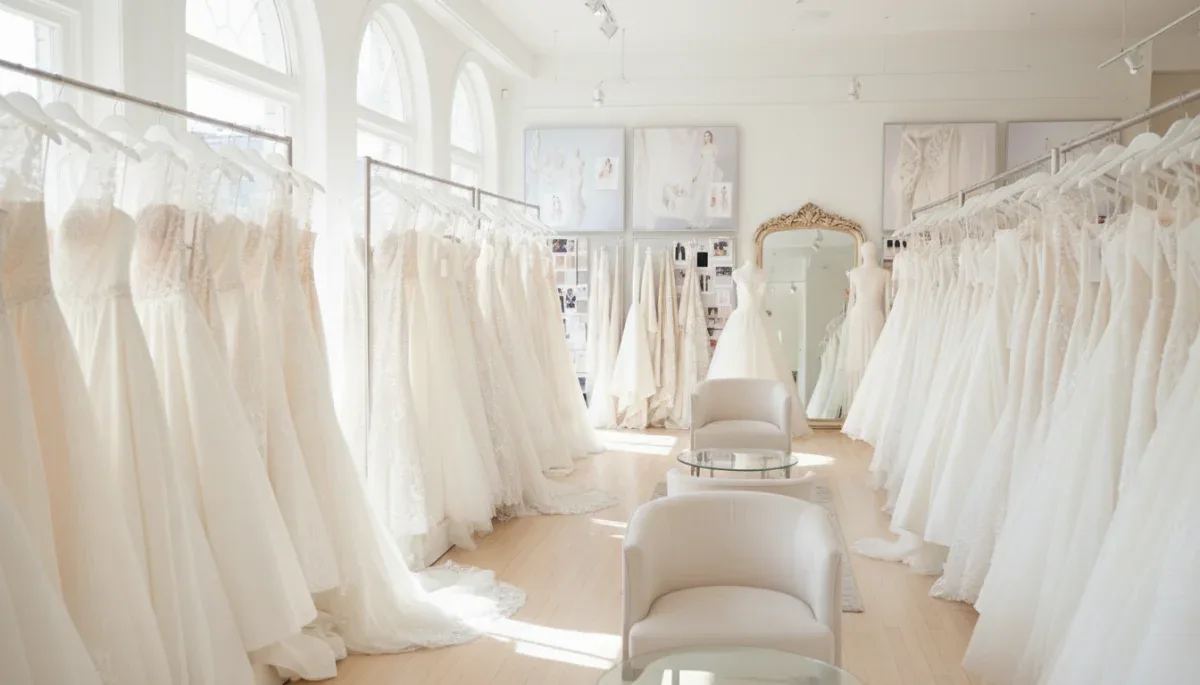
The dresses presented by premier luxury houses at Bridal Fashion Week often retail between eight thousand and twenty-five thousand dollars, featuring hand-appliqued French lace, internal steel boning, and layers of natural silk organza. Mainstream commercial retail operates within a much lower price band, requiring substantial engineering adjustments to achieve a similar aesthetic.
Mass-market manufacturers achieve runway-inspired aesthetics by substituting expensive raw materials with dependable synthetic alternatives. Natural silk crepe, which drapes fluidly but wrinkles easily and carries high textile costs, is replaced by heavy polyester crepe that mimics the matte finish while offering wrinkle resistance and structural durability. Hand-loomed Chantilly lace is substituted with precision machine-knitted corded lace, allowing intricate botanical patterns to be reproduced quickly and uniformly at scale.
Internal engineering undergoes an equal amount of simplification during the transition to retail. Runway couture relies on custom waist stays, hand-stitched horsehair hem bindings, and individual cups shaped directly to the model. Mainstream commercial manufacturers replace these bespoke elements with molded foam bra cups, synthetic boning channels that flex under heat, and prefabricated crinoline skirts. These standardizations reduce labor hours from dozens of manual hand-sewing sessions to streamlined assembly line production.
Adapting avant-garde runway trends for practical brides
Runway bridal presentations frequently display theatrical design elements engineered to generate press coverage and social media traction. Oversized architectural sleeves, trailing floor-length capes, extreme plunge necklines, and dramatic drop-waist silhouettes dominate presentation photographs, but their retail equivalents are substantially tempered for day-to-day wedding environments.
When an extreme silhouette gains sustained editorial attention in New York, commercial design teams analyze the underlying design principle rather than copying the exact garment. If dramatic puff sleeves emerge as a dominant theme, mainstream brands introduce detachable organza sleeve bands or subtle off-the-shoulder straps. This modular approach allows wedding dress shoppers to capture the visual aesthetic for ceremony photographs while maintaining the physical mobility needed for dinner and reception dancing.
Color stories follow an identical softening trajectory across the market. Avant-garde bridal runways frequently feature vivid pastel tones, exposed metallic threads, and bold floral hand-painting. When these trends filter down to high-street retail, they materialize as soft blush linings, champagne underlays beneath ivory tulle, or delicate pearlescent beading that reads as traditional white from a distance but reflects warm dimensions under indoor venue lighting.
Price tiering from luxury couture to budget bridal retail
The bridal marketplace distributes runway concepts through clearly defined pricing tiers, with each segment absorbing trends at a different operational speed. Luxury couture collections sit at the top, selling directly to custom clientele and high-end specialty boutiques through exclusive regional distribution agreements.
The bridge and premium contemporary bridal sector, with gowns generally priced between two thousand and five thousand dollars, acts as the immediate pipeline for runway trends. These brands purchase license rights or develop original lines that mirror runway aesthetics using high-grade polyester blends and semi-automated embroidery machines. Because their design cycles move quickly, these manufacturers often debut their interpretations within six to eight months of the original New York presentations.
Budget bridal retailers and direct-to-consumer online platforms occupy the final tier of the distribution cycle, typically offering styles between four hundred and fifteen hundred dollars. These operations rely on established sales data from the preceding bridal seasons before committing to mass fabric yardage. As a result, shoppers find runway-inspired trends appearing in budget retail channels twelve to eighteen months after their New York debut, once manufacturing techniques have been completely standardized and customer demand is indisputably proven.
Strategic shopping windows for trend-conscious shoppers
Understanding the industry calendar allows wedding dress shoppers to time their salon appointments for maximum selection, special pricing, or early access to incoming styles. The arrival of new collections directly alters the price structure of previous floor samples inside independent bridal boutiques.
When new inventory ordered from the April market begins arriving in late autumn, boutique owners must clear space on their floor racks. Consequently, November through January is the primary window for salon sample sales, where brides can buy previous-season runway samples at significant markdowns. These dresses have been tried on in-store but represent authentic designer construction at prices comparable to standard mass-market gowns.
For shoppers focused on the latest runway silhouettes, trunk shows offer the earliest possible access. Designers ship their complete runway collection directly to select boutiques for a single weekend, allowing local brides to view and order dresses months before regular inventory arrives in showrooms. Attending a designer trunk show often includes small promotional incentives, such as minor customization allowances or modest purchase credits, making it a valuable option for shoppers with specific brand preferences.
At a glance
| Market factor | What to know |
|---|---|
| Lead time | Styles reach local salons six to nine months after runway debuts. |
| Fabric substitutions | Mass retail replaces delicate silk and hand lace with durable polyester. |
| Sample sales | Late autumn offers steep discounts on outgoing runway inventory. |
| Budget availability | Mainstream off-the-rack chains adapt luxury trends after twelve months. |
Frequently asked questions
Can I buy dresses directly from New York Bridal Fashion Week?
No, you cannot purchase gowns directly at the event because it is an industry trade show. Designers show prototypes exclusively to retail buyers, press, and stylists. Individual shoppers must wait until participating boutiques order and receive the collection, or book an appointment at an official designer trunk show later in the season.
Why do retail bridal gowns feel heavier than runway samples?
Commercial wedding dresses use heavier polyester linings, reinforced synthetic boning, and machine-stitched support layers to withstand handling and diverse body sizes. Runway prototypes are constructed for brief runway presentations on models, often using fragile, ultra-lightweight silk and minimal internal structuring that would degrade under regular salon use.
How long does it take for a runway trend to become affordable?
It takes roughly twelve to eighteen months for high-fashion runway trends to enter budget bridal collections. Mass-market retailers wait for premium salons to validate sales demand before investing in large-scale fabric orders and streamlined factory patterns that bring retail prices below fifteen hundred dollars.
Do bridal salons stock every dress seen on the New York runway?
No, individual boutiques select only a curated fraction of a designer's full collection. Store buyers choose ten to fifteen styles per line based on what matches their regional market's budget and venue styles, meaning experimental or extremely revealing runway pieces are frequently skipped during commercial ordering.
The bottom line
New York Bridal Fashion Week sets the creative baseline for the entire wedding dress industry, but boutique owners, textile constraints, and consumer budgets dictate what actually lands on sales racks. By keeping track of show seasons and learning how runway materials translate into commercial fabrics, you can navigate showroom appointments with confidence and find modern styles without paying luxury couture markups. Before placing a non-refundable gown deposit, always verify your salon's expected delivery timeline and production schedule with the store manager.
Written by
Rita Luiza
Rita Luiza writes about US fashion events, seasonal fashion trends and budget fashion tips for news4shein.com. Each article explains how things work, compares published details such as prices, policies and program rules, and points readers to the official source before they decide.