
How to Stop Your Acrylic Sweaters from Pilling
Advertisement
You can prevent acrylic sweaters from pilling by reducing surface friction, washing knitwear inside out in cold water, and keeping garments entirely away from high heat. Acrylic is an engineered petroleum-based fiber known for softness and affordability, but its short staple lengths break and twist into fuzzy knots whenever two surfaces rub together continuously.
This routine helps budget-conscious shoppers extend the life of fast-fashion knits without buying expensive specialty gear. The trade-off is that synthetic yarns naturally shed through normal movement, meaning no maintenance technique can stop friction permanently; you must maintain these protective habits throughout the life of the garment.
Why acrylic knitwear develops pills so quickly
Pilling happens when mechanical abrasion breaks the tiny individual filaments that make up a strand of yarn. In natural wool, weak broken fibers often snap clean off the garment and fall away unnoticed during routine wear. Acrylic fibers possess immense tensile strength despite being extruded in short lengths, which means broken ends refuse to fall off. Instead, loose filament ends remain anchored to the core yarn strand, collect lint and dust, and wrap tightly around neighboring fibers to produce permanent, dense balls across the chest, underarms, and wrists.
Advertisement
Loosely spun yarns aggravate this structural flaw significantly. Budget knitwear manufacturers intentionally spin acrylic yarns with minimal twist to deliver a plush, airy hand feel on store racks. While this gives the sweater immediate warmth and softness, it leaves individual filament ends exposed to everyday contact. Any friction against rough denim jackets, purse straps, car seat belts, or office desks pulls those untwisted fibers outward immediately.
Static electricity acts as an invisible accelerator for yarn damage in synthetic fibers. Because acrylic contains very little moisture compared to plant or animal fibers, dry indoor winter air charges the fabric, causing loose fibers to stand upright. Once standing, these stray strands latch onto neighboring fibers and trap airborne debris, forming the nucleus of a brand-new pill within hours of normal movement.
How to wash acrylic sweaters to minimize surface friction
Laundering represents the most abrasive event an acrylic garment experiences during its usable lifespan. Inside a washing machine drum, tumbling garments rub against one another under pressure, creating thousands of micro-abrasions that churn smooth yarn into a fuzzy haze. Modifying your laundry protocol prevents this agitation from ruining your favorite budget knits.
Essential laundry steps for synthetic knits
- Turn the garment inside out before washing so that unavoidable surface contact occurs solely on the hidden interior.
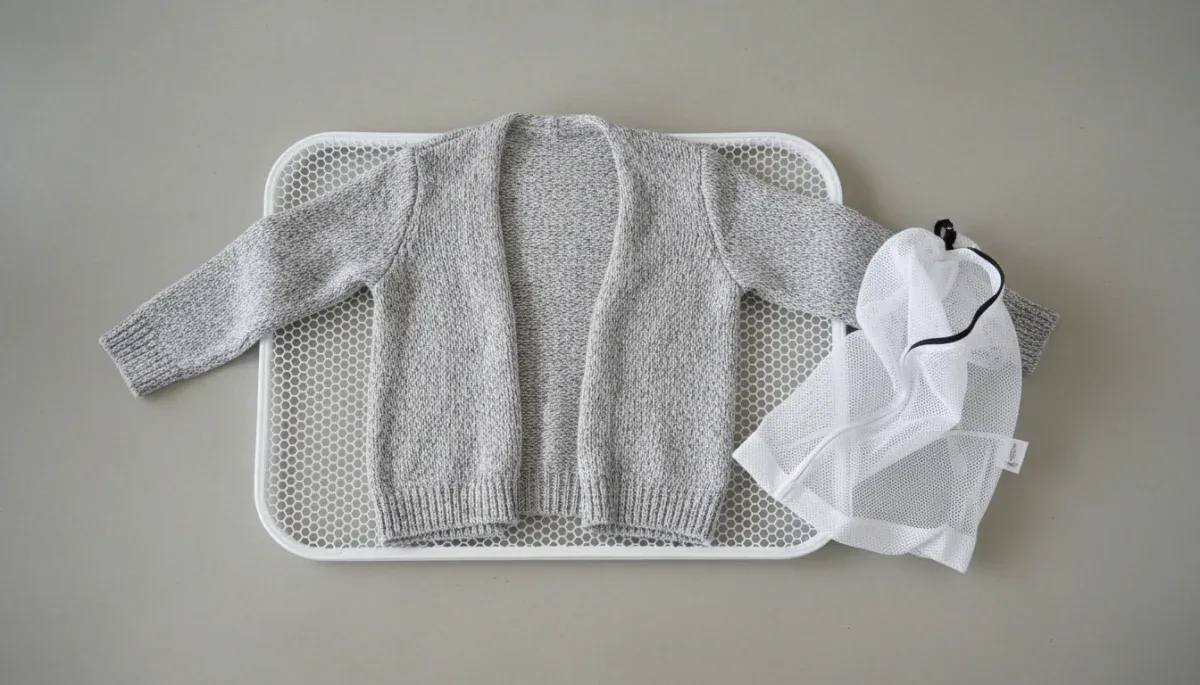
- Place each sweater into a fine-mesh zippered laundry wash bag to isolate the yarn from abrasive zippers, metal buttons, and rough denim seams.
- Select the gentle or delicate cycle with cold water to reduce drum agitation speeds and preserve fiber elasticity.
- Use a mild liquid detergent formulated without harsh optical brighteners or heavy powdered minerals that scrape fibers.
The choice between liquid detergent and powdered formulas is critical for acrylic care. Powdered soaps do not always dissolve completely in cold water cycles, leaving microscopic abrasive granules wedged between synthetic yarns. As the machine spins, these undissolved particles saw against the knit filaments. Switching to a standard liquid formula eliminates this mechanical grinding entirely while removing body oils effectively.
Drying techniques that protect synthetic yarn integrity
The mechanical heat and tumbling action of a household clothes dryer represent the fastest way to ruin an acrylic sweater. Acrylic begins to soften at elevated temperatures, a characteristic known in textile science as thermoplasticity. When a dryer drum heats synthetic knits while tossing them relentlessly, the yarn structure relaxes, surface fibers separate from the twist, and static cling accelerates knot formation across every seam.
Never hang a damp acrylic sweater on a traditional hanger. Synthetic fibers absorb minimal water within the filament itself, but heavy moisture gets trapped in the open knit spaces between threads. The downward gravitational pull of this water stretches out the shoulder seams, loosens yarn twists, and leaves loose strands dangling where they rub against hips and arms. Horizontal drying remains the gold standard for preserving synthetic knit shapes.
To dry your sweater correctly, lift it from the wash bag without wringing or twisting the body. Lay the wet garment flat on a clean, dry bath towel, roll the towel tightly into a cylinder like a sleeping bag, and press down with your palms to blot excess moisture. Afterward, unroll the towel and transfer the sweater onto a flat mesh drying rack away from direct sunlight, baseboard heaters, and forced-air vents.
Preventing daily wear friction from accessories and layering
While washing habits account for major damage, daily friction during routine wear creates localized pilling patterns. You can identify the external cause by observing where pills accumulate: chest pills usually point to seat belts or heavy necklaces, side pills stem from cross-body bag straps, and inner-sleeve fuzz originates from rubbing against the sweater torso.
Cross-body bags and backpacks constructed from heavy canvas or ballistic nylon act like sandpaper against soft acrylic knits. The continuous sway of a bag strap as you walk grinds fibers away across the shoulder and ribcage. When wearing budget knitwear, switch to smooth leather or nylon satchels carried by hand, or shift the strap position regularly to prevent sustained abrasion on a single yarn zone.
Layering decisions also determine how well your knitwear holds up over a winter season. Wearing an unlined wool coat, rough corduroy jacket, or rigid denim over an acrylic sweater creates continuous shearing forces throughout the day. Choosing outerwear lined with smooth polyester, acetate, or satin eliminates internal resistance, allowing your sweater to glide harmlessly inside the coat sleeve without catching delicate fibers.
Smart storage routines that keep knits smooth between wears
How you store acrylic clothing between seasonal rotations directly influences yarn longevity. Storing sweaters jammed tightly onto closet rods creates constant contact whenever you slide neighboring hangers back and forth. This daily brushing generates low-grade abrasion that accumulates into visible fuzz across the shoulders and necklines before the garment is even worn.
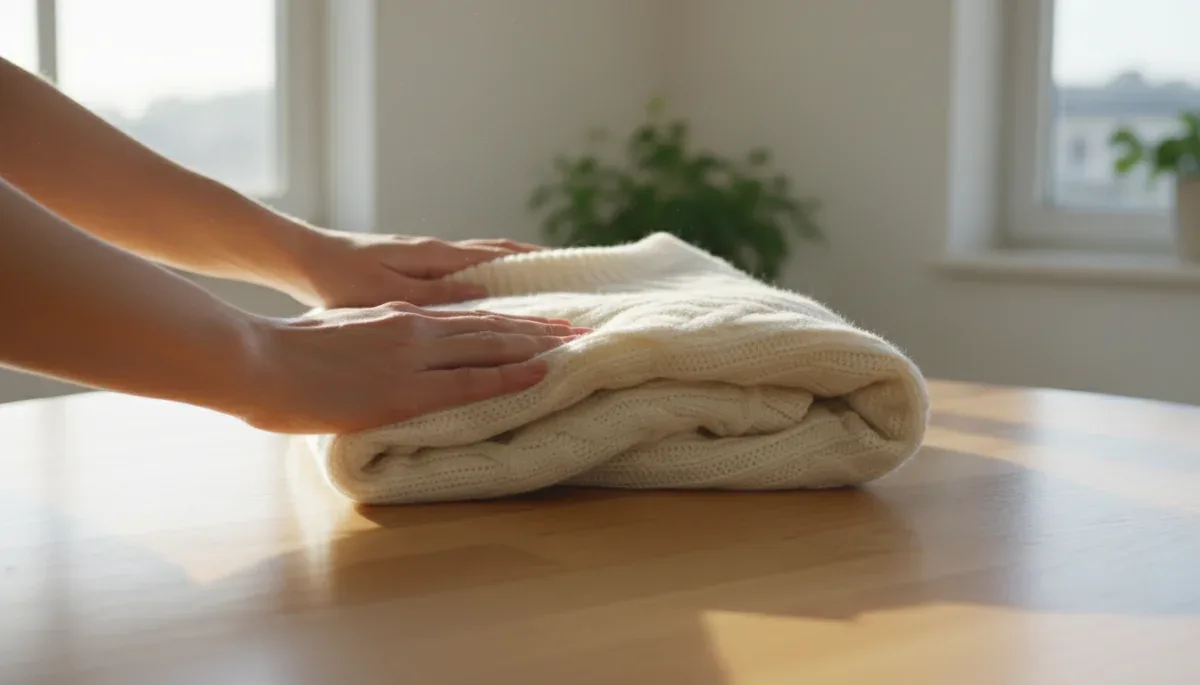
Folding your knitwear and resting it on open closet shelves or inside breathable dresser drawers prevents friction entirely. When folding, smooth the fabric flat with clean hands, fold the sleeves diagonally across the back panel, and fold the bottom hem upward in thirds. Never use wire or plastic hangers for acrylic knits; beyond creating unsightly shoulder bumps, hanging stretches the knit grid open, exposing interior strands to external snagging.
Off-season storage requires clean, climate-controlled environments. While acrylic is an artificial fiber impervious to clothing moths that feast on animal keratin, dust mites and static can still settle into dormant knits. Store clean sweaters inside breathable cotton storage bins rather than airtight plastic bins, which can trap ambient moisture and cause unpleasant odors over long summer months.
How to safely remove existing pills without damaging stitches
Despite careful prevention, minor surface fuzz is an inevitable reality of wearing synthetic garments. Removing these pills as soon as they appear keeps the fabric looking sharp and prevents tiny clusters from entangling larger surrounding loops. However, ripping pills away with your bare fingers tears healthy yarn strands right out of the core knit, compounding the problem over time.
Safe defuzzing tools and methods
- Use a battery-operated fabric shaver with an adjustable guard height to gently slice fuzz off the sweater surface without pulling.
- Gently glide a manual sweater comb across tight-gauge knits, working in one steady direction along the grain of the stitches.
- Rest the garment entirely flat on a hard tabletop or ironing board before defuzzing to prevent blades from catching raised seams.
- Never use disposable multi-blade bathroom razors, as they lack protective guards and easily sever structural knit loops.
Always hold the knit taut with your free hand while operating an electric defuzzer. Work in small circular patterns with zero downward pressure, letting the spinning blades trim the protruding pills cleanly. Empty the lint collection chamber frequently to prevent motor drag, which can pull uncut yarn into the cutting head and produce irreversible holes.
At a glance
| Care factor | What to know |
|---|---|
| Wash temperature | Always use cold water to prevent synthetic filaments from softening and unraveling. |
| Agitation control | Place sweaters inside fine-mesh wash bags and select gentle or delicate cycles. |
| Drying method | Lay knits flat on a towel or drying rack; never tumble dry or hang wet. |
| Friction reduction | Avoid textured canvas bags and wear smooth, lined outerwear over acrylic pieces. |
Frequently asked questions
Can fabric softener stop an acrylic sweater from pilling?
Liquid fabric softener coats fibers with a lubricating chemical layer that temporarily reduces static and surface tension, but it cannot repair broken strands. Over time, excessive softener builds up on synthetic acrylic yarn, making it difficult to wash clean and attracting dust particles that encourage additional knotting.
Does higher-priced acrylic pill less than cheap acrylic?
High-end acrylic often uses tighter yarn twists and longer fiber filaments that resist abrasion better than budget fast-fashion versions. However, all acrylic yarn consists of synthetic petroleum polymers that will pill eventually if subjected to regular mechanical friction and high dryer heat.
Can I shave pills off an open chunky knit sweater?
You should avoid motorized fabric shavers on loose, chunky, or textured novelty knits because protruding loops easily catch inside the blade chamber. For open-weave knits, snip individual pills by hand using small embroidery scissors, or stroke the surface very gently with a specialized sweater comb.
Why do acrylic underarms pill faster than the rest of the sweater?
Underarm zones endure constant reciprocal friction every time your arms swing during walking, combined with body heat and natural moisture. This repetitive rubbing rubs loose fiber ends together constantly, making the armpits and torso flanks the primary zones for early fuzz formation.
The bottom line
Keeping acrylic knitwear smooth and wearable across multiple seasons requires simple, consistent habits that control surface friction and eliminate exposure to heat. By washing sweaters inside mesh bags, laying them flat to dry, and avoiding abrasive outerwear and bags, you preserve the original texture of budget-friendly garments without spending money on replacements. Before changing your laundry routine, check the care tag sewn into your sweater's side seam to confirm the exact fiber blend and manufacturer washing temperature limits.
Written by
Lucas Bastos
Lucas Bastos writes about budget fashion tips, celebrity style steals and seasonal fashion trends for news4shein.com. Each article explains how things work, compares published details such as prices, policies and program rules, and points readers to the official source before they decide.