
How fashion trade shows shape budget retail racks
Advertisement
Fashion trade shows determine the fabrics, silhouettes, and color palettes that budget retail stores stock months before those garments arrive on sales floors. These large industry gatherings function as wholesale marketplaces where independent manufacturers, textile mills, and apparel distributors pitch ready-to-produce collections directly to commercial merchandise planners.
This behind-the-scenes system helps everyday shoppers understand why identical cuts and patterns suddenly appear across discount department stores and digital fast-fashion catalogs at the exact same moment. The catch is that retail buyers must commit their budgets up to eight months in advance, forcing them to balance predicted consumer demand against strict factory production minimums and shifting material costs.
The role of commercial apparel expos in retail sourcing
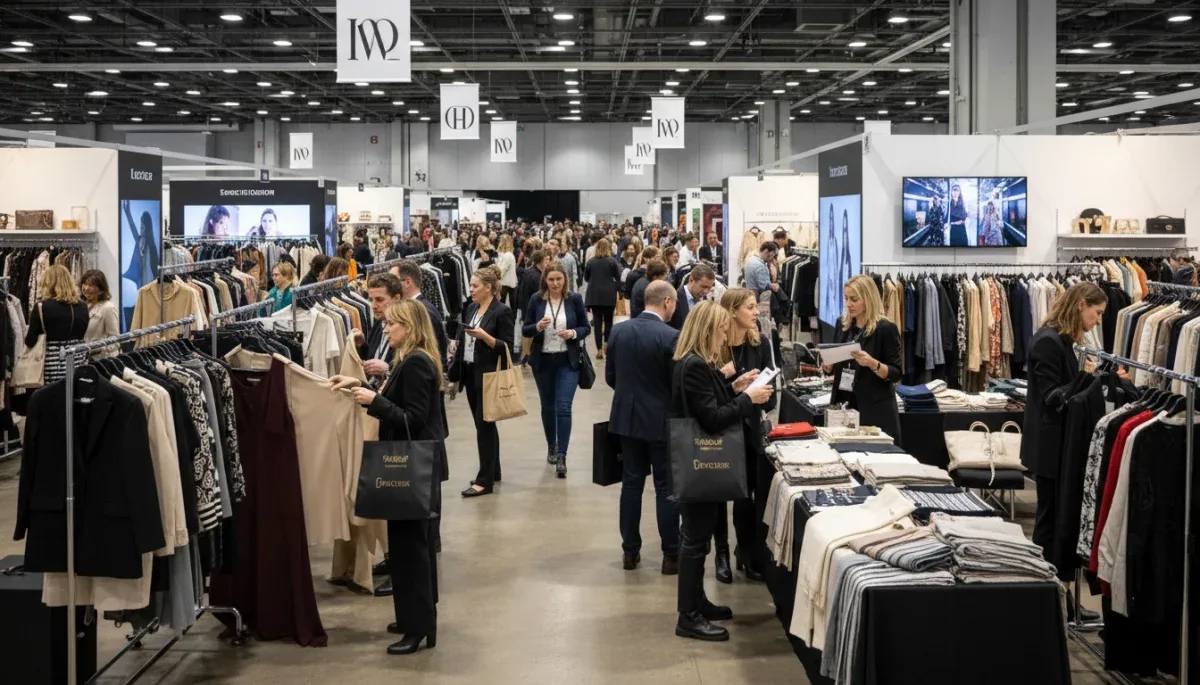
Commercial clothing trade events serve as the central purchasing hubs for the apparel industry. Rather than creating every garment from scratch, corporate retail buyers travel to regional and national conventions to inspect physical samples from hundreds of wholesale suppliers. Events such as MAGIC in Las Vegas, Texworld in New York, and the Offprice Show bring overseas garment factories together with retail purchasing teams representing department stores, specialty chains, and off-price outlets.
Advertisement
During these events, vendors set up temporary showrooms lined with sample racks that showcase upcoming seasonal lines. Retail representatives touch the textiles, examine stitch density, evaluate zipper durabilities, and check pattern alignments in person. Because digital photographs often mask thin weaves or rough synthetics, physical expos provide buyers with the tactile evaluation necessary to verify whether a low-cost garment meets minimum structural standards before signing commercial supply contracts.
How volume buyers negotiate fabric and production costs
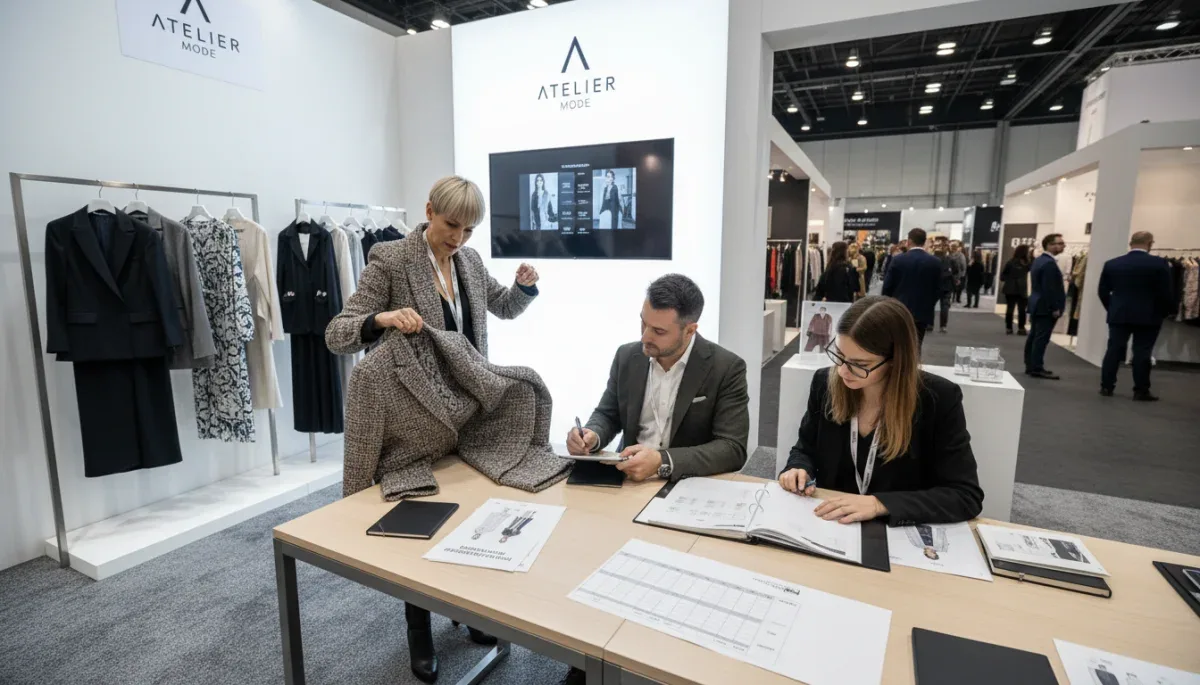
Budget apparel companies operate on thin margins, meaning that fractions of a cent on a single seam can alter the financial viability of an entire inventory order. At commercial expos, buying teams sit down with factory representatives to negotiate purchase terms based on minimum order quantity, which is the smallest number of units a supplier agrees to produce in a single production run. By guaranteeing orders in batches of tens of thousands, large retail brands secure steep discounts that smaller boutiques cannot access.
When an existing sample is slightly too expensive for an intended retail price point, buyers collaborate with vendors directly at the booth to re-engineer the garment. Suppliers offer material substitutions that preserve the visual silhouette of a popular design while reducing total manufacturing expense.
Key negotiation points for off-price buyers
- Switching natural fibers such as cotton or linen to blended polyester or rayon equivalents to lower raw material expenses.
- Reducing complex hardware, including metal snap buttons, custom pull tabs, and heavy internal linings.
- Simplifying seam construction by replacing double-needle hems with single-needle finishes to speed up factory assembly time.
- Ordering off-season fabric overstock that mills already have stored in inventory at discounted rates.
Translating runway concepts into accessible mass garments
High-end fashion weeks set the conceptual tone for global style, but business trade shows convert those artistic statements into wearable, profitable merchandise. Runway collections present directional ideas—such as exaggerated shoulder pads, intricate drapery, or delicate silk weaves—that are impractical and unaffordable for mass retail. Wholesale vendors visit those designer presentations and immediately develop practical commercial interpretations to display at their trade booths.
By the time a retail buyer encounters these interpretations at a trade event, the avant-garde elements have been streamlined into casual workwear, denim, and daily basics. A runway presentation featuring artisanal crochet may translate at an exhibition into an acrylic knit sweater that can run through industrial laundry machines. This intermediate translation step guarantees that everyday consumers gain access to current seasonal aesthetics without paying designer prices or managing demanding garment care routines.
The seasonal timeline from showroom floor to shopping cart
Apparel sourcing follows a rigid calendar governed by global supply chains, international shipping schedules, and customs clearance procedures. Traditional mass-market retailers place their primary wholesale orders six to nine months ahead of the intended retail season. A summer collection displayed at an August trade show typically finishes production and arrives at domestic distribution centers between January and March of the following year.
Agile value brands often participate in immediate-delivery trade shows to capture fast-moving internet fads. In these settings, vendors exhibit open-stock merchandise that has already been manufactured and stored in domestic warehouses. Buyers can purchase available lots and have them stocked on physical shelves or uploaded to online stores within three to four weeks.
Typical ordering milestones across the calendar
- Exhibition and sample review where buyers select prototypes and evaluate raw material swatches.
- Tech pack finalization and unit volume commitment based on regional store distribution models.
- Factory production, wet processing, quality inspection, and international maritime freight transit.
- Domestic intake at fulfillment warehouses followed by regional store routing and display rollout.
Why multiple budget stores carry nearly identical items
Shoppers frequently notice that competing budget department stores and online outlets stock sweaters, trousers, or dresses that look virtually indistinguishable. This visual uniformity happens because numerous retailers purchase inventory directly from the same third-party original design manufacturers exhibiting at trade shows. When a manufacturer designs a successful jacket pattern, dozens of competing corporate buyers may place wholesale orders from that exact same sample rack.
To distinguish these shared designs, retailers utilize private labeling. The manufacturer stamps the specific store brand onto the neck label, applies custom hangtags, and ships the identical garments out to different retail distribution hubs. Unless an apparel chain retains an exclusive design contract with a manufacturer, the underlying clothing remains uniform across multiple competing storefronts.
At a glance
| Factor | What to know |
|---|---|
Frequently asked questions
Can regular consumers attend fashion trade shows?
No, standard apparel trade shows are closed industry events restricted to verified wholesale buyers, manufacturers, and press representatives. Organizers require proof of business operations, including retail tax certificates, commercial business licenses, and official corporate purchase orders, before issuing entry badges.
Which major apparel trade shows operate in the United States?
Prominent domestic apparel sourcing events include MAGIC in Las Vegas, Texworld in New York, and the Offprice Show. These exhibitions host thousands of vendor booths displaying textiles, private-label collections, footwear, and accessories tailored to commercial volume purchasers.
How far in advance do budget retailers place their orders?
Most traditional budget retailers finalize their purchase orders six to nine months prior to the target selling season. However, buyers sourcing from immediate-delivery trade pavilions can receive ready-made inventory within two to six weeks to capitalize on sudden microtrends.
Why do budget brands buy from trade shows instead of designing everything in-house?
Purchasing wholesale designs from trade show suppliers reduces corporate overhead, internal patternmaking expenses, and manufacturing risks. Third-party vendors absorb initial prototype development costs, allowing retail brands to focus purely on marketing, logistics, and store sales.
The bottom line
Fashion trade shows serve as the central commercial engine driving mass-market clothing, transforming abstract high-fashion concepts into scalable garments manufactured at affordable wholesale rates. Because competing budget stores frequently source identical patterns from the same trade show suppliers, visual style alone does not guarantee superior quality. Shoppers evaluating budget-friendly fashion should always check the interior fabric composition label and inspect seam construction rather than assuming a higher retail price tag indicates a unique or better-made item.
Written by
Rita Luiza
Rita Luiza writes about US fashion events, seasonal fashion trends and budget fashion tips for news4shein.com. Each article explains how things work, compares published details such as prices, policies and program rules, and points readers to the official source before they decide.