
How to wash delicate knits at home without damage
Advertisement
Washing delicate knits at home requires cool water, minimal mechanical friction, and flat drying to prevent fibers from expanding or contracting beyond repair. When handled with basic laundry precautions, delicate knitwear made of wool, cashmere, cotton blends, or fine synthetics retains its structural shape and soft texture without professional cleaning.
This method helps anyone maintain everyday sweaters, lightweight tops, and cardigans on a budget while avoiding recurring dry cleaning bills, though it requires patience and sufficient horizontal drying space. Knowing how yarn construction and water temperature interact gives you control over the lifespan and fit of your wardrobe.
Understanding why delicate knitwear changes shape
Knit garments behave differently from woven fabrics because they consist of continuous loops of yarn linked together. This interlocking structure provides natural flexibility, drape, and elasticity, but it also leaves the fabric vulnerable to external tension and moisture. When submerged in liquid, yarns absorb water, which increases garment weight and causes the loose loops to distort under their own mass.
Advertisement
Animal fibers like wool, alpaca, and cashmere have overlapping microscopic scales along each strand. When exposed to heat, rapid temperature fluctuations, and vigorous agitation, these scales open up and catch against each other. This interlock forms a dense, matted texture through a process called felting, which causes permanent shrinkage. The garment does not simply become smaller; the fibers bond together, hardening the hand feel and eliminating elasticity.
Plant fibers like cotton and linen, as well as synthetic options such as acrylic or polyester, react to different physical pressures. Cotton yarns swell significantly when saturated, loosening tension until heat forces the fibers to contract. Acrylic and other synthetics do not shrink from water absorption, but high heat can relax or melt thermoplastic fibers, permanently stretching or warping the garment out of alignment.
Key factors in knit fiber distortion
- Thermal shock: Sudden transitions between hot and cold water trigger immediate fiber contraction in natural animal hairs.
- Mechanical friction: Rubbing, twisting, or vigorous machine rotation forces hair scales to interlock tightly.
- Gravitational drag: The heavy weight of retained water pulls wet garment loops downward when lifted incorrectly.
- Surface tension: Inadequate rinsing leaves detergent residues that stiffen yarn structures and attract ambient moisture.
Preparing your garments before cleaning
Preparation prevents most common laundry accidents before a single drop of water touches the fabric. Start by inspecting the manufacturer care label sewn into the interior seam. While many garments marked dry clean can be hand washed safely at home, items labeled dry clean only with structured tailoring, inner linings, leather trim, or heavy beadwork must go to an experienced cleaner.
Fasten all closures before washing to prevent hardware from catching on loose yarn loops. Button every button on cardigans, zip all zippers completely, and secure hook-and-eye closures. Turn the knit inside out so that any minor friction generated during cleaning occurs on the interior face of the fabric rather than the visible exterior. This simple adjustment reduces surface pilling and keeps your garments looking newer for a longer period.
Taking quick baseline measurements of your favorite knitwear before immersion provides an objective guide for post-wash reshaping. Note the distance across the chest from armpit to armpit, the total length from shoulder to hem, and the sleeve length from shoulder seam to wrist. If the fabric stretches slightly during rinsing, these reference numbers tell you exactly how far to pat the garment back into shape during blocking.
Pre-wash preparation checklist
- Check the inner care tag for fabric blend percentages and specific manufacturer warnings.
- Examine seams, cuffs, and collars for minor snags or loose threads that could unravel in water.
- Fasten all zippers, buttons, and snaps completely to eliminate exposed edges.
- Turn the entire garment inside out to protect the outer surface from friction and pilling.
- Measure chest width and sleeve length to assist with accurate reshaping later.
Hand washing steps for sensitive natural fibers
Hand washing provides the gentlest cleaning method for fine natural fibers like merino wool, cashmere, and loose open-weave knits. Begin with a spotless wash basin, clean sink, or plastic tub. Ensure the basin is entirely free of bleach, abrasive cleaners, or cosmetic residues that could degrade fiber protein structures or strip dyes unevenly.
Fill the basin with cool or lukewarm water, keeping the temperature around 85 degrees Fahrenheit or cooler. High heat weakens natural protein binders, while cold water protects dye integrity and prevents dimensional changes. Add a small measure of gentle, pH-neutral liquid detergent formulated specifically for delicates or woolens. Standard household laundry detergents often contain biological enzymes designed to break down protein stains, which can slowly erode animal fibers over time.
Disperse the detergent thoroughly throughout the water before submerging your knitwear. Submerge the garment completely and press it down into the suds with open palms. Never twist, scrub, or wring the fabric. Work the suds gently through the knit by submerging and releasing the material several times. Let the garment soak for ten to fifteen minutes, which allows the surfactant to lift soil and body oils without excessive agitation.
Drain the soapy water while supporting the knit with both hands against the side or bottom of the basin. Refill the vessel with clean, cool water of identical temperature to avoid thermal shock. Press the garment gently under the fresh water to release suds. Repeat this drain-and-fill sequence until the rinse water runs completely clear of foam and slipperiness.
Using a washing machine cycle safely
Certain robust knits, including cotton blends, tightly spun synthetic yarns, and garments explicitly labeled machine washable, can be laundered in modern home appliances if strict precautions are taken. Front-loading machines or high-efficiency top loaders without a center agitator post are the safest options. Traditional center agitators pull and twist clothing, placing excessive mechanical stress on delicate knit loops.
Always place each knit item into its own zippered mesh laundry bag before placing it in the machine drum. The mesh bag prevents the garment from tangling around other clothes, stops sleeves from stretching around the drum circumference, and shields the knit from abrasive friction. Select a bag size that fits the garment comfortably without compressing it into a dense ball.
Select the delicate, gentle, or wool cycle on your appliance. These specialty programs limit mechanical action by using intermittent soaking periods and slow drum rotations. Program the cycle for cold water only, and set the final spin speed to low or medium-low. While a high-speed spin removes more moisture, the extreme centrifugal force presses the wet fabric violently against the drum perforations, leaving indentations and stretching seams.
Wash delicate knits alongside similar lightweight items or by themselves. Never mix knitwear with heavy workwear, denim, or items with exposed metal zippers and rough velcro patches. Adding harsh textures into the same wash cycle accelerates pilling and increases the chance of snagging delicate knit yarns.
Removing water without wringing or twisting
The transition from wet washing to drying is the point where most permanent stretching happens. When a knit garment is saturated, the weight of the water inside the yarn loops exerts strong downward force. Lifting a dripping wet sweater by its shoulders or collar pulls the neckline out of shape and stretches the body permanently under its own moisture load.
Always support the entire garment from underneath with two cupped hands when lifting it from the basin or machine drum. Gather the wet knit into a compact bundle and press it gently against the bottom of the sink to release the first rush of excess water. Never twist or wring the garment with your wrists, as twisting snaps delicate fibers and misaligns the side seams.
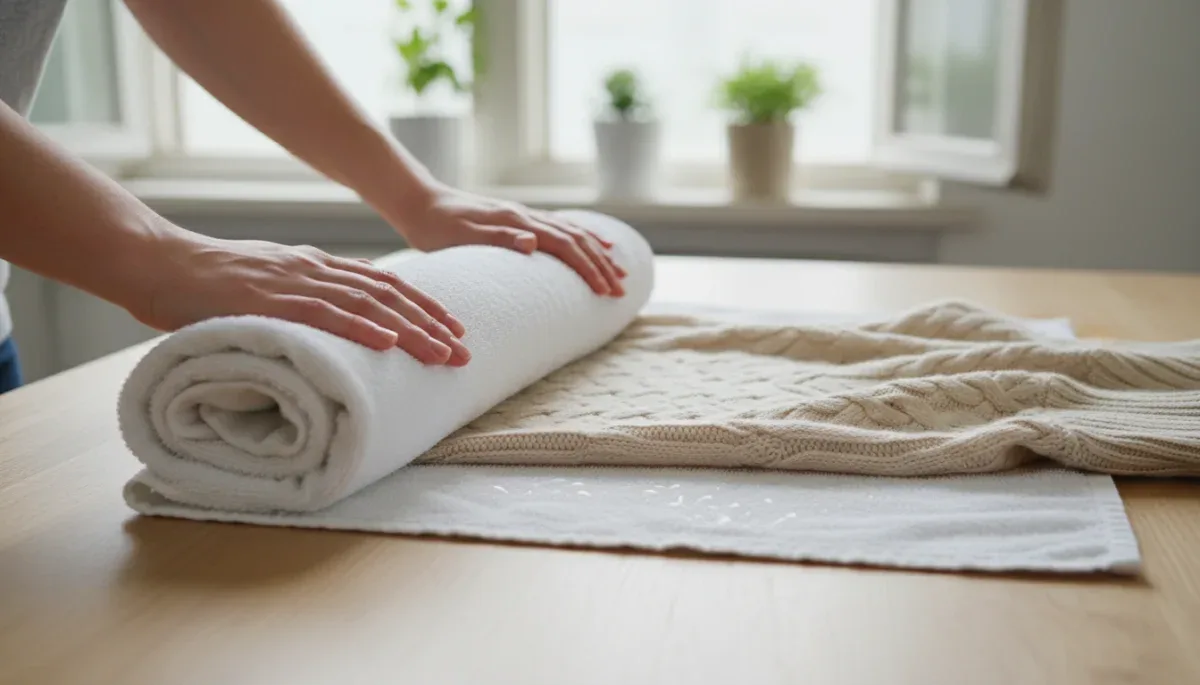
The safest method for water extraction is the towel roll technique. Lay a clean, dry, lint-free bath towel flat on an even, water-resistant surface like a clean countertop or floor. Spread your damp knit flat on top of the towel, smoothing out major wrinkles with your hands. Starting at the bottom edge, roll the towel and sweater together into a tight cylinder, keeping the knit securely encased within the terry cloth layers.
Once rolled, apply gentle, even pressure along the entire length of the towel cylinder using your forearms or open palms. You can also walk across the roll using clean socks to use body weight for extraction. The dry cotton loops of the bath towel absorb the bulk of the trapped water from the knitwear. Unroll the towel and remove the garment, which should now feel damp rather than saturated.
Reshaping and drying knits flat
Drying knitwear correctly ensures that the garment maintains its original proportions and drape. Never hang a wet or damp knit on a clothes hanger, doorknob, or clothesline. Gravity pulls the wet lower half downward, creating elongated shoulder bumps, stretched armholes, and an uneven hemline that cannot be reversed through ironing.
Spread a fresh, dry bath towel or a horizontal mesh drying rack across a flat surface in a well-ventilated area. Lay the damp garment flat on the surface. Smooth out the front, back, and sleeves, gently easing the fabric into its intended shape. Refer to the pre-wash measurements you took earlier, aligning the chest width and sleeve lengths to those target dimensions.
This process, known in textile care as blocking, sets the final dried shape of the knitwear. Ensure side seams run straight along the edges rather than twisting diagonally across the front of the body. Smooth ribbing at the cuffs and hem so that the edges remain elastic rather than flared or wavy.
Keep the drying knit away from direct sunlight, open heat vents, baseboard radiators, and active fireplaces. Excessive heat bakes wet fibers, causing rapid shrinkage in wool and structural brittleness in synthetics, while direct sun exposure bleaches dyes. Allow the top of the garment to dry thoroughly, then flip it over onto a fresh dry surface to allow air circulation to the underside until moisture has evaporated entirely.
At a glance
| Care factor | Rule for delicate knits |
|---|---|
| Water temperature | Use cool or lukewarm water under 85 degrees Fahrenheit to protect fibers. |
| Detergent choice | Pick a mild, enzyme-free liquid detergent formulated for delicates. |
| Water extraction | Roll the damp garment inside a dry bath towel instead of wringing. |
| Drying orientation | Lay the piece flat on a mesh rack or towel away from direct heat. |
Frequently asked questions
Can you unshrink a wool sweater that went through the dryer?
You can sometimes relax slightly shrunken wool by soaking it in lukewarm water mixed with hair conditioner or baby shampoo for thirty minutes. This lubricates the fibers, allowing you to gently stretch the fabric back toward its original dimensions before laying it flat to dry.
Is baby shampoo safe for washing delicate knits?
Baby shampoo works well as a gentle substitute when specialized wool wash is unavailable. Its neutral pH cleans natural protein fibers like cashmere and alpaca without stripping their protective natural oils or eroding the delicate surface structure of the yarn.
How often should you wash delicate knits?
Delicate knits generally require washing only after four to six wears unless visibly soiled. Airing them out between wearings and wearing a lightweight base layer underneath prevents odor absorption and reduces unnecessary water exposure, helping garments last significantly longer.
Can you hang delicate knits on a padded hanger to dry?
You should never dry wet knits on any hanger, including padded versions. The concentrated weight of retained water pulls the shoulders and neck downward, creating permanent misshapen puckers and stretching the body lengthwise regardless of the padding thickness.
The bottom line
Mastering the technique for washing delicate knits at home preserves wardrobe staples, prevents costly fabric damage, and reduces dry cleaning expenses over time. By using cool water, minimizing agitation, extracting moisture inside a towel roll, and drying horizontally, you keep delicate fibers intact season after season. Before wetting any garment, always double-check the inner fabric content label to confirm fiber makeup and care restrictions.
Written by
Lucas Bastos
Lucas Bastos writes about budget fashion tips, celebrity style steals and seasonal fashion trends for news4shein.com. Each article explains how things work, compares published details such as prices, policies and program rules, and points readers to the official source before they decide.